Barbara Bürscher

Practice without performance.

Yoga can quickly turn into another performance: the deeper backbend, the perfect pose, the right spiritual language, the feeling that you’re doing it properly. I’m more interested in what actually happens when you practise, including the parts that aren’t calm, graceful or particularly impressive.

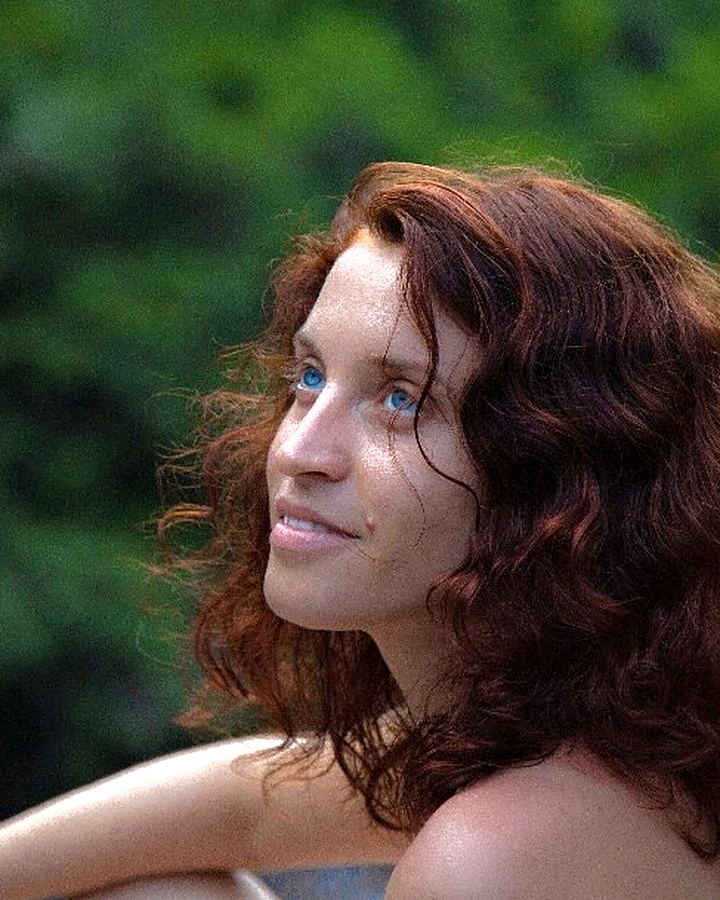
Portrait of Barbara outdoors, looking up and smiling.

What I think practice is for

Maybe you know you’re exhausted and keep going anyway.

Maybe you feel your jaw tighten in a conversation, pretending everything is fine.

Maybe you can think about your feelings but can’t really observe them in your body.

Maybe you’ve become very good at trying to improve yourself.

I know all of this from my own experience.

For me, practice is where I get curious about that instead of trying to fix it. You move, you breathe, and you notice what is there: tiredness, restlessness, not much, something you have been avoiding for weeks. Sometimes just seeing it clearly is enough to make a different choice and to stop treating your body like a project.

How I teach

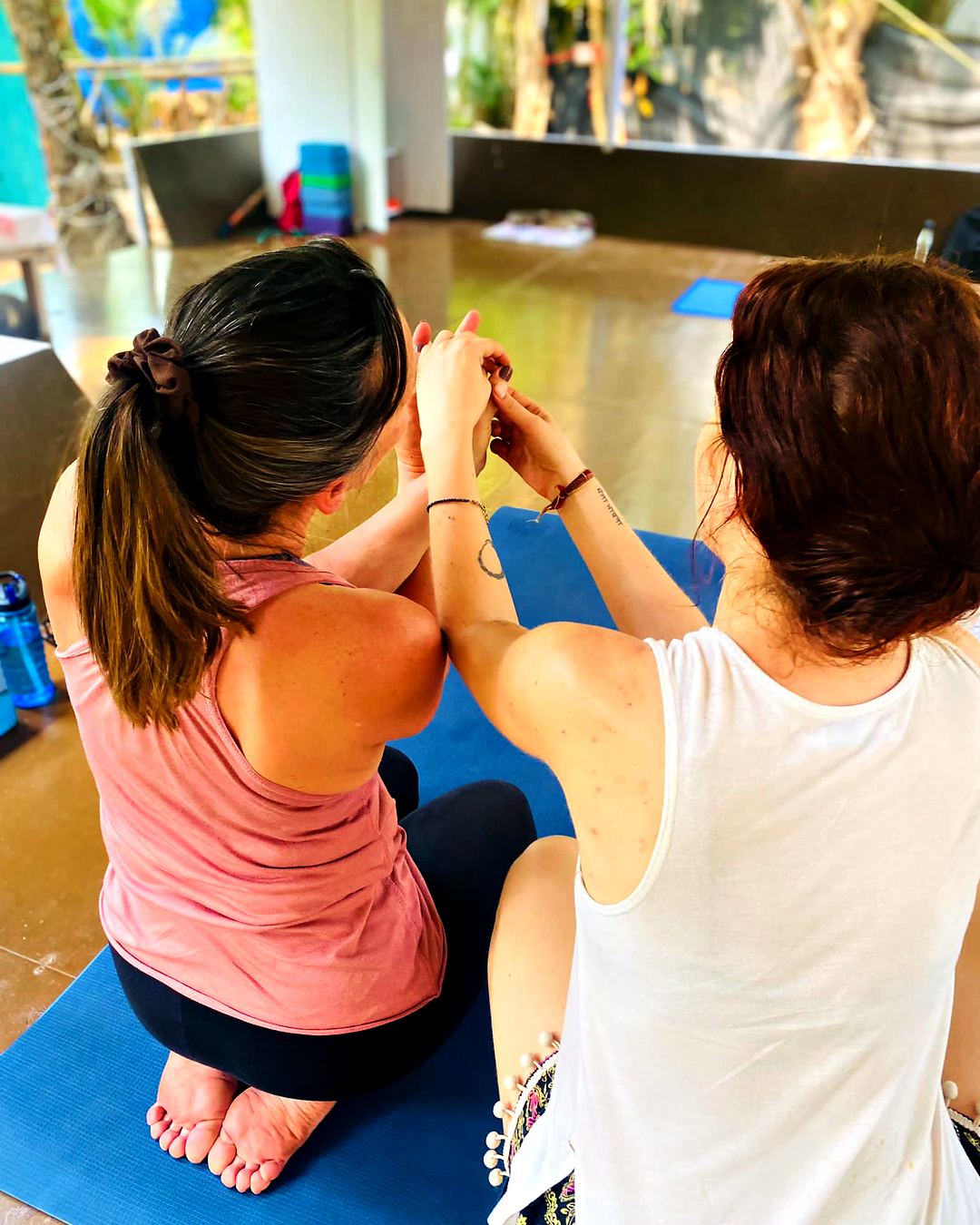
Barbara adjusting a student’s arm position during a seated posture.
Teaching in South Goa, 2023.
  1. 01

    I explain things

    I tell you what we’re doing and why. I use everyday language and translate Sanskrit terms. You don’t need to share a belief system. You don’t need to look spiritual.

  2. 02

    I give you the context

    I say where a practice comes from and what that tradition teaches about it, so you can understand it rather than trusting me blindly. I love this part, because it’s usually the most interesting bit, and almost always more nuanced than the version that ends up on Instagram.

  3. 03

    Then it’s your turn

    I won’t tell you what you should feel. You might feel something completely different from the person next to you, or nothing at all, and both are worth knowing. If you’d rather rest or skip something, do. You don’t owe me an explanation.

I take traditional practice seriously, and I also like questions.

I still work like a journalist

I studied journalism and communication in Vienna and worked as a journalist, mostly on politics and on medicine and health. My job was to take complicated things and make them clear to people without specialist knowledge.

Journalism taught me to ask where something comes from, to look for context, to distinguish a claim from evidence, and to be careful about presenting assumptions as facts.

That doesn’t switch off when I step on the mat. Not because I want to catch anyone out, but because I want to understand. I love these traditions, and I believe in a lot of what they teach. There is real knowledge in them, often worked out by people who had nothing but their own body and their meditation and observation of it.

The chakras are a good example. They are central to my yoga teaching. I teach them the way the tradition describes them: as a kind of map, not as anatomy. The map is useful. You don’t have to believe in it to work with it.

Mystery has its place. I just don’t think something has to be made mysterious to make it meaningful.

How I got here

I never planned to become a yoga teacher. I thought I was building a career in journalism, taking on more responsibility as a managing editor. But there was this desire to go and explore before life got too serious.

So a few days after finishing my master’s degree in 2018, I flew to New Zealand with a one-way ticket and a working-holiday visa. I started volunteering at a yoga community north of Auckland. At first, yoga was simply something I was drawn to. Then I wanted to understand it. That is still pretty much how it works for me: first I experience something, then I want to know what is going on.

The eight-month working holiday turned into seven years of moving between New Zealand, Australia, Bali, Thailand, India and, now and then, Austria. In 2019 I did my first long training, 900 hours at The Yoga Institute in Mumbai, followed by a sound healing and tantra meditation training in Goa.
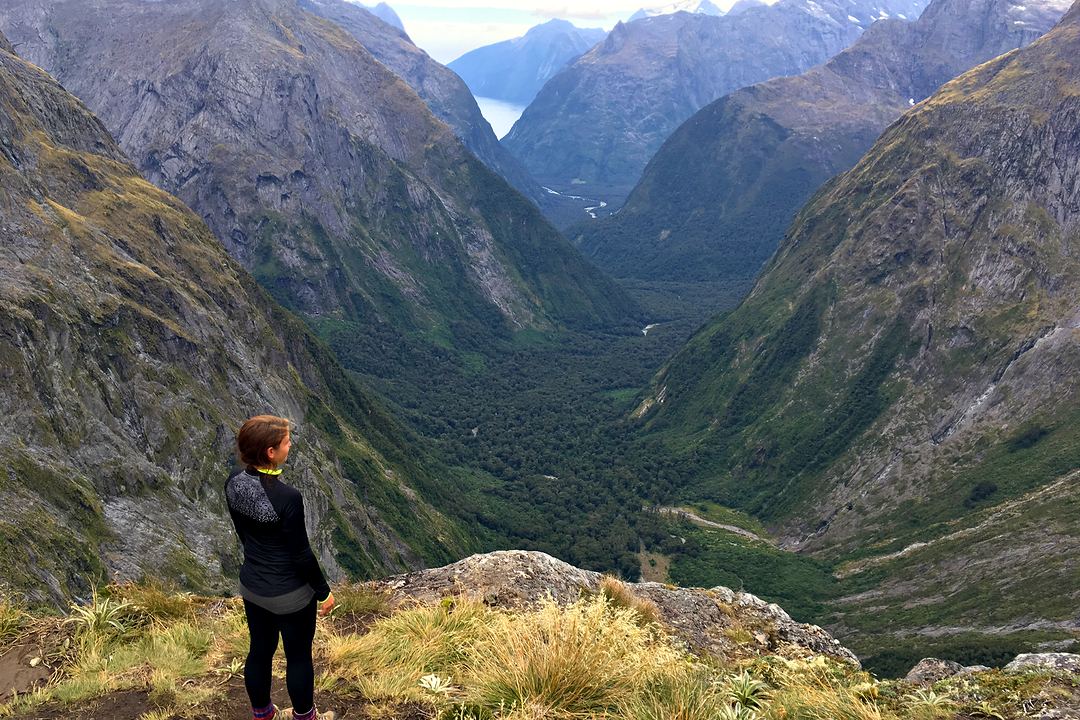
A woman standing on a ridge above a deep glacial valley.
New Zealand, 2019.
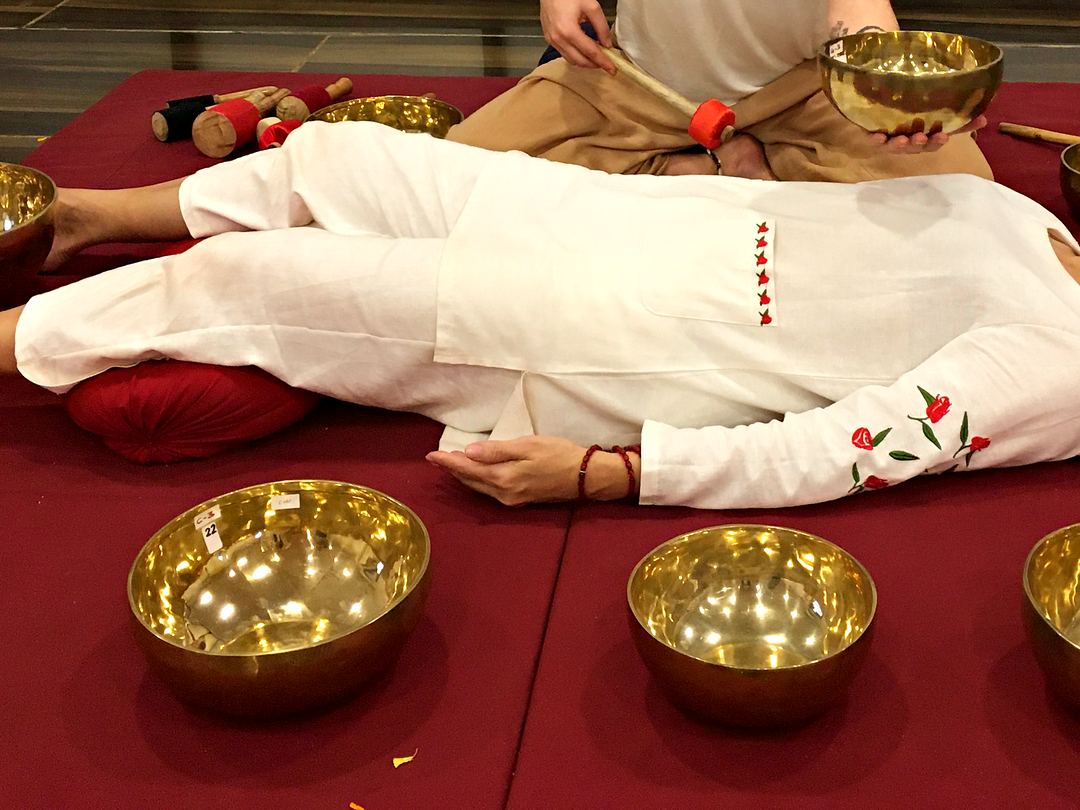
A practitioner holding a singing bowl beside a person lying on a mat, brass bowls placed around them.
Sound healing training, Goa, 2020.

Then COVID brought me back to Vienna, and I took a job in marketing. On paper it was perfect: interesting topics, a great team, the freedom to try out my own ideas. And I felt completely wrong in it. Empty, and a bit locked in. On the first day of my summer holiday I read about a six-week training in Greece, and I knew. I quit the job, gave up my flat and left. I haven’t regretted it once.

Since then, I take the difference between what looks right and what feels right seriously.

I kept practising and started teaching in different venues in South and South East Asia and at an Ayurvedic cure clinic in Sri Lanka.

I began to develop my own way of teaching. I didn’t follow a career plan. I followed questions. And those questions eventually took me beyond yoga into embodiment work, women’s practice and Tao Tantric Arts, where I found different ways of exploring the same territory.

Today I live in Canacona in South Goa, where I teach yoga classes and workshops. I also offer my work online.

Maybe you’re here because

  • You live a lot in your head, and mostly it works.
  • You’re good at functioning and getting things done, but not always at noticing what you need.
  • You want a proper physical practice, without performing flexibility or spirituality.
  • Or you simply want to spend a little more time in your body and see what happens.

Find out for yourself

What I love about these practices is that you can try them out. The Taoists connected the organs with emotions, seasons and sounds. The yogis drew a map of centres from the base of the spine to the crown of the head. These things fascinate me. Humans have created all these strange maps for understanding experience, and you can test them in your own body.

But I don’t want you to take my word for any of it.

A teacher can give you a practice. A tradition can give you a map. Nobody can have the experience for you.

Maybe it works for you. Maybe it doesn’t. Maybe you change your mind about it six months later. Good.

I want to give you enough context, enough space and a practice you can actually explore for yourself.

It’s not about finding the right answer. It’s about becoming more familiar with your own experience.

Background

Journalism
MA, Journalism and Communication, University of Vienna
Yoga
900-hour teacher training, The Yoga Institute, Mumbai
Embodiment
Embodiment coaching, Embodiment Unlimited (Mark Walsh)
Tao Tantric Arts
Facilitator training with Shashi Solluna and Minke de Vos

If this sounds like your kind of practice, come to a class or write to me. I’m glad to answer questions first, sceptical ones included.